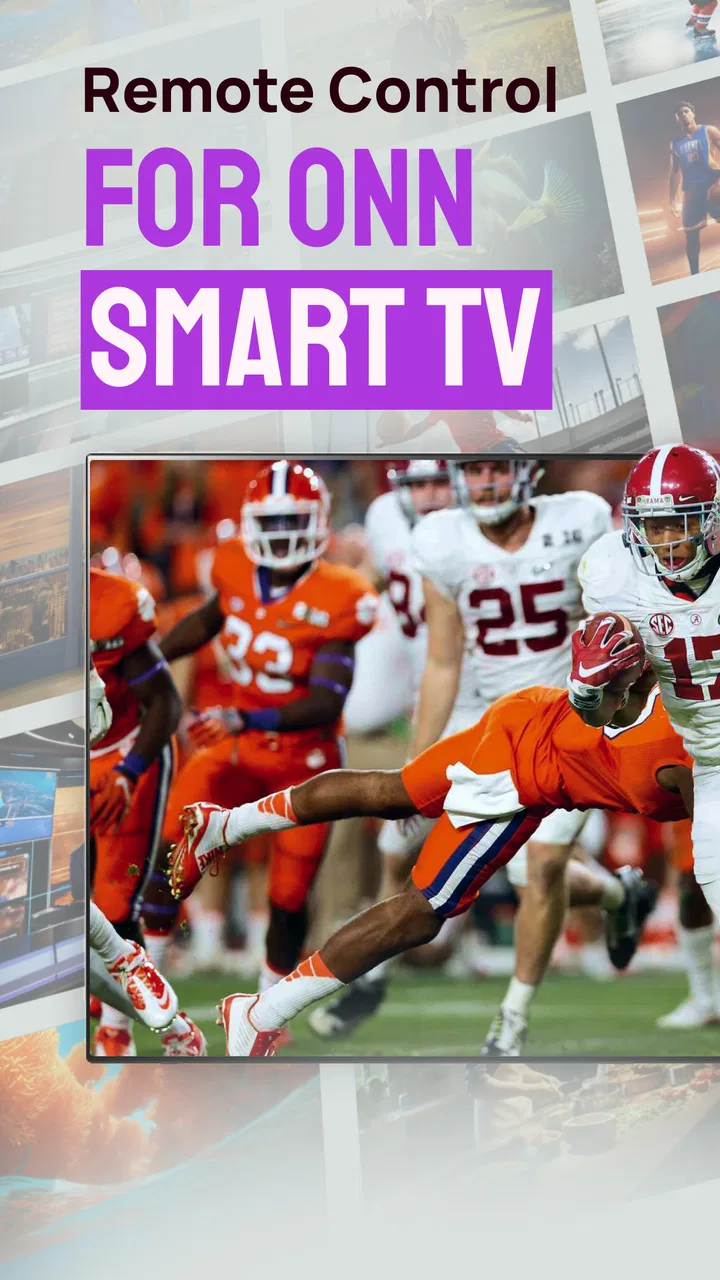
Remote Control for Onn Roku TV
- 4.6
- Rating
- 100.00K
- Installs
- Free
- Price
 Analysis by App-foxy
I installed Remote Control for Onn Roku TV because losing a physical remote is one of those small household problems that can turn into a surprisingly long search. This free House & Home app from MONIQ TAP., CO LTD is designed for Onn Roku televisions, and its appeal is straightforward: use a phone as the control point for everyday TV actions, with casting and mirroring included in its overall purpose. My experience is that it makes the most sense when the TV is already part of a familiar home network and I need a convenient replacement rather than another complicated smart-home system.
The app has an average rating of 4.2 from around 330 ratings, with more than 10 thousand installs. That gives it a modest but useful track record, while also setting the right expectation: this is a focused remote utility, not a broad entertainment platform. It is free to install, rated for Everyone, and runs on Android 8.0 or later. The current version is 1.1, and optional in-app purchases range from $4.99 to $24.99 per item, so I would check the available options carefully before paying for anything beyond the basic remote experience.
From a missing remote to a usable TV control
I focus first on what happens when I need to act quickly: this app is most useful when the Onn Roku TV is already awake or reachable on the home network, rather than when the whole setup is offline. I’d test a basic command before relying on it for a busy evening, then keep the physical remote nearby until I know the phone-to-TV connection suits my home. That simple check sets up a closer look at performance under heavier use.
You May Also Like

 Blood Strike: 2.5 Anniversary
Blood Strike’s Loadouts Turn Every Drop Into a Tactical Gamble
A close look at Blood Strike’s custom loadouts: how fast access to signature weapons reshapes its battle royale rhythm, rewards preparation, and narrows the gap between fights.

 Pandora - Music & Podcasts
Pandora’s Music Is Easy to Start, but Harder to Recover
Pandora’s strength is its low-effort path from a seed to a station. Its weak spot is how much confidence it asks you to place in connection, setup, and quiet recovery.

 8 Ball Pool
 Is Built on Rivalries, Rematches, and Routine
A close look at the rivalries, rematches, shared routines, and unanswered safety questions that turn a quick pool match into a persistent mobile community.

 Samsung Music
’s Quiet Strength Is Playing What You Already Own
Its reach comes less from spectacle than from dependable access to a personal library. That simplicity is both the app’s strongest retention engine and its ceiling.

 AccuWeather: Weather Radar
AccuWeather Review: A Quick, Clear Forecast for Everyday Decisions
For everyday plans, the best forecast is the one you can understand quickly. AccuWeather makes rain timing, radar, and local conditions easy to act on, with a few trade-offs.

 Hill Climb Racing
Why Hill Climb Racing Still Turns Crashes Into One More Run
A tiny car, a bumpy hill and one more upgrade: Hill Climb Racing keeps resurfacing because its simple chaos makes every near-miss feel personal.
More From Our News Desk
View All News


The starting condition matters more than it first appears
The most realistic use case begins with an Onn Roku TV that is already set up in the living room, bedroom, guest room, or another familiar space, but the physical remote is unavailable. Maybe it is under a cushion, left in another room, or simply no longer working. In that situation, a phone-based remote can be more useful than waiting for a replacement. The important detail is that this app is specifically aimed at Onn Roku TVs, so the television model is the first thing I would verify before installing it.
I would also begin with the home network rather than the app itself. A phone remote needs a practical way to communicate with the TV, and the smoothest workflow comes when both devices are connected within the same household setup. If the television is offline, the phone is using a different network, or the TV is still waiting for initial configuration, the app cannot magically solve every setup problem. This is one of the main differences between a phone remote and a physical one: the physical remote can often control a TV without depending on network discovery.
That trade-off is easy to overlook when the app description sounds simple. In daily use, the app is strongest as a replacement for a missing or inconvenient remote after the TV is ready to receive commands. It is less suitable as the only plan for a television that has never been configured, has lost its network connection, or is located somewhere with unreliable connectivity.
Installing and preparing the phone
Installation is uncomplicated, and the Everyone age rating makes the app approachable for a shared household. I like that the basic idea does not require buying a separate controller before I can test whether it fits my television. The free entry point is especially useful for someone who wants to confirm compatibility and connection behavior first.
Once installed, I would keep the phone reasonably close to the TV during the first connection attempt. That is not because a remote app needs to be used from a few inches away forever, but because it removes an unnecessary variable while pairing or discovering the television. If the TV does not appear immediately, I would check that both devices are using the intended home network, wake the TV, and reopen the app before assuming the app is unusable.
This short preparation step is one of the practical lessons I took from using a phone as a remote: the app may be ready before the television is ready. A TV in standby, a recently changed router, or a phone that has moved to a guest network can interrupt what should feel like a simple handoff. Treating the first connection as a small setup workflow, rather than tapping once and expecting instant control, saves time.
Choosing the television and sending the first command
After the app finds the intended Onn Roku TV, the useful test is not browsing through every option. I would start with a basic action such as waking the television, adjusting volume, or moving through the Roku interface. If that first command works, I would then test the controls I use most often. This approach quickly separates a genuine connection problem from a button or layout preference.
The benefit of a phone remote is that the phone is usually already nearby. I can search for it, unlock it, open the app, and continue without hunting through the sofa. That is a small convenience, but it becomes meaningful in homes where several people use the same TV and the original controller often travels between rooms.
There is also a subtle cost: a phone remote is not always as immediate as a physical one. Unlocking the phone and opening the app adds a few steps, and the screen may dim while I am watching something. A physical remote remains ready in the hand and can be operated by touch without looking. For late-night viewing, children, older relatives, or anyone who dislikes using a phone for basic controls, that difference may outweigh the convenience of having a backup.
Passing control between people and devices
The handoff is where this kind of app becomes genuinely useful in a shared home. Suppose one person starts a program in the living room, then another person needs to lower the volume, pause playback, or navigate to a different Roku screen. The phone can become the temporary control surface without requiring the original remote to be found first.
I would still avoid assuming that every household member will have the same experience. A person comfortable with phone gestures may prefer the app, while someone who expects dedicated buttons may find it less natural. The best role for it is often as a backup or second controller: it reduces the urgency of a missing remote without forcing every viewer to abandon the familiar physical one.
For a guest, the handoff can be less seamless because the guest may not know the TV's network arrangement or how the app identifies the correct television. I would set it up before people arrive rather than trying to explain the process during a movie night. That small bit of preparation turns the app from an emergency experiment into a dependable household tool.
Where casting and mirroring fit into the workflow
The app also presents casting and mirroring as part of its purpose, which expands the use case beyond replacing buttons. In a realistic scenario, I might want to move something from the phone to the larger Onn Roku TV after using the phone to connect. That can be useful for sharing content with people in the room, showing something to a family member, or making the television an extension of what is already on the phone.
I would treat this as a separate stage rather than assuming that remote control, casting, and mirroring are identical experiences. Remote control is about sending TV navigation commands. Casting is about directing supported content toward the television. Mirroring is about showing the phone screen more broadly. Each handoff can introduce different expectations, and the result may depend on the phone, the TV, the network, and the content being shared.
A practical tip is to decide what outcome I actually want before choosing the feature. If I only need to pause a program, a remote command is the simplest route. If I want to show a photo or a phone-based page to people across the room, mirroring may be more appropriate. If I am trying to play supported content on the TV while keeping the phone available for other tasks, casting may be the better fit. Thinking in terms of the desired result prevents unnecessary switching between modes.
The result after the connection works
When the workflow succeeds, the app removes a very specific annoyance: the TV remains usable even when the dedicated remote is not within reach. I can keep the phone beside me, control the viewing session, and use the same device for a larger-screen handoff when that makes sense. For households with an Onn Roku TV and a compatible Android phone, that is a practical form of redundancy.
The strongest result is not that the app transforms the television. It is that it gives me another route into functions I already use. That makes the learning curve relatively small, and it also explains why I would recommend testing the free experience before considering any optional purchase. If the basic connection does not fit the way I use the TV, paying for additional access will not fix the underlying mismatch.
I also appreciate the app's narrow focus. It is not trying to be a universal controller for every television brand in the house. That specialization can reduce confusion when the target is specifically an Onn Roku TV, although it also limits its usefulness if I regularly switch between different brands or want one remote app for several kinds of equipment.
Where the flow breaks
The first breaking point is compatibility. A Roku television from another manufacturer may look similar in everyday use, but this app is presented for Onn Roku TVs. I would not choose it for a mixed-brand home expecting one reliable solution. Someone with several televisions should compare the app's intended device support with the actual screens they own before making it part of a larger routine.
The second breaking point is network dependence. If the phone and TV cannot see each other, the remote workflow stops before any button can help. This is the clearest situation in which a physical remote is better. A dedicated controller does not need the phone to be charged, unlocked, connected to the right network, or available to another family member.
The third issue is the phone itself. A nearly empty battery, a notification interruption, a locked screen, or a phone being used for another task can make the app less convenient than it sounds. I would not rely on it as the sole emergency method in a home where the physical remote is already missing. It is safer to think of it as a useful backup that should be tested while everything is working.
There is also a privacy and comfort consideration in the broad sense of device sharing. Handing someone a physical remote gives them only the TV controller. Handing over a phone may expose other apps, messages, or personal information unless the owner manages the phone carefully. For families, that may not matter; for guests or shared spaces, it is a reason to keep the original remote available.
How it compares with the usual alternatives
The obvious alternative is the supplied physical remote that came with the television. It wins for instant access, tactile buttons, and independence from the phone's battery and network state. The app wins when the remote is lost, when I want a second controller, or when I want to move from TV control into a phone-to-TV sharing workflow.
Another alternative is buying a replacement remote. That can be the better long-term choice for a household that wants a dedicated device always sitting beside the TV. It is also more suitable for people who do not want to unlock a phone every time they adjust the volume. The app makes more sense when I need a quick, low-commitment solution or when I already carry the phone from room to room.
A broader universal remote app may be a better choice for homes with multiple television brands and other equipment. However, broader coverage can also mean more setup screens and less focus on the Onn Roku experience. I would choose this app when the central problem is one compatible Onn Roku TV, not when I am trying to consolidate an entire entertainment system.
Who should use it and who should skip it
I would recommend it to an Onn Roku TV owner who frequently misplaces the remote, wants a convenient second controller, or would like to explore controlling and sharing from a phone. It is also a sensible option for a bedroom TV where the physical remote is often left across the room. The free installation makes it easy to judge the connection for a particular home before changing the household routine.
I would be more cautious about recommending it to someone who expects a remote to work without network setup, wants a controller for several brands, or dislikes using a touchscreen for basic navigation. It is not the right replacement for a physical remote in every situation, especially if the TV is offline or the phone is regularly unavailable.
The optional purchases deserve a measured approach. Because the app is free to install but lists in-app items from $4.99 to $24.99 each, I would first establish that the television connects reliably and that the controls suit the family. The most important value question is not whether extra access exists; it is whether the free path already solves the problem I installed the app to fix.
My recommendation after following the full workflow
Remote Control for Onn Roku TV is a focused utility with a clear place in a connected home. I found its value in the complete sequence: start with a missing or inconvenient physical remote, connect the phone and television, test a simple command, pass control to another viewer, and then use casting or mirroring when the goal shifts from navigation to sharing. That workflow is more useful than treating the app as a mere collection of remote buttons.
Its limitations are equally clear. The experience depends on the right television, a workable network connection, and a phone that is available when needed. It cannot fully replace the immediacy of a physical controller, and it is not the best answer for a mixed-brand entertainment setup. Still, for the specific owner who has an Onn Roku TV and wants a free, convenient backup, I think it is worth trying. The app does not eliminate every point of friction, but it can turn a missing remote from a household interruption into a manageable problem.
MONIQ TAP., CO LTD has kept the idea easy to understand, and the current version 1.1 is a reasonable starting point for testing the experience on a compatible device. With its Everyone rating and Android 8.0 minimum, it is accessible to a wide range of Android users. My final view is simple: use it as a practical second route to the TV, not as a guaranteed substitute for every remote situation. That expectation matches what the app does best and makes the handoff from phone to television much less frustrating.
FAQs for Remote Control for Onn Roku TV
01Is the Remote Control for Onn Roku TV app compatible with all Roku devices?
The Remote Control for Onn Roku TV app is specifically designed to work with Onn Roku TVs. While it may function with some other Roku devices, compatibility is not guaranteed. It's best to check the app's description for specific device compatibility to ensure it meets your needs.
02Do I need an internet connection to use the Remote Control for Onn Roku TV app?
Yes, an internet connection is typically required for the app to function properly. The app connects to your Onn Roku TV over a shared Wi-Fi network. Without a stable internet connection, you may experience connectivity issues or limited functionality.
03Are there any additional costs associated with using the Remote Control for Onn Roku TV app?
The app itself may be free to download, but there could be in-app purchases or subscription options for enhanced features. It's important to review the app's pricing details in the store to understand any potential costs associated with premium features.
04Can I use voice commands with the Remote Control for Onn Roku TV app?
Some versions of the Remote Control for Onn Roku TV app may support voice commands, allowing you to control your TV more conveniently. Check the app's feature list to see if voice command functionality is available and how it can be activated within the app settings.
05What should I do if the app isn’t working with my Onn Roku TV?
If the app is not working, ensure that your mobile device and TV are connected to the same Wi-Fi network. Restart both devices and try reconnecting. If issues persist, check for app updates or consult the app's support resources for troubleshooting assistance.
Pros
- Easy setup with clear instructions.
- Seamless connectivity with Roku TV.
- User-friendly interface for all ages.
- Customizable remote layout options.
- Works with voice commands efficiently.
Cons
- Limited to Onn Roku TV models only.
- Requires stable Wi-Fi connection.
- Ads can be intrusive at times.
- No offline functionality available.
- Some features may lag occasionally.

Remote Control for Onn Roku TV
Gallery